Bad Tie Rod Symptoms: What Needs Checking
Steering play, unusual noises and uneven tire wear can prompt a steering inspection, but none identifies a worn tie rod on its own. The linkage needs to be checked before a replacement is selected.
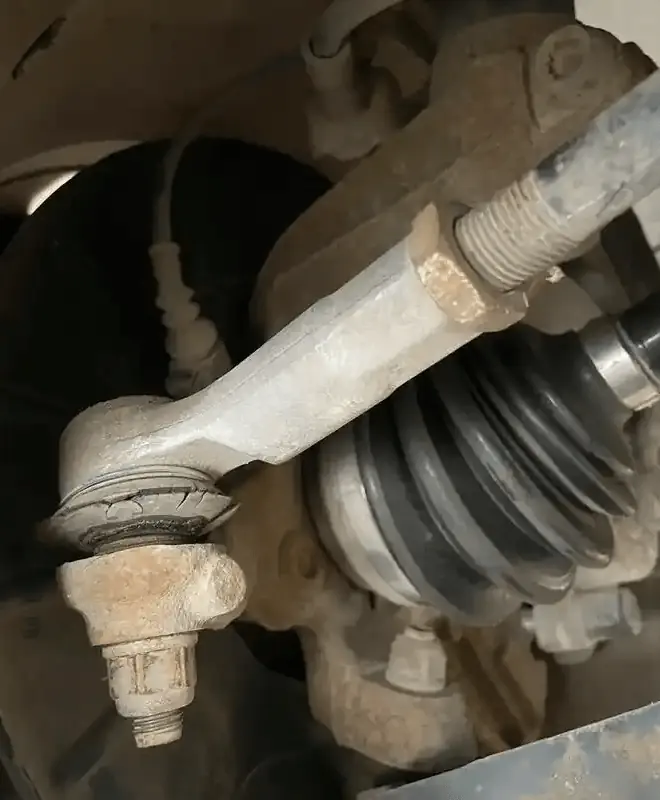
Signs worth checking
Steering looseness, a knock while turning, vibration or irregular tire wear may lead a technician to inspect the tie rods. The same signs can come from other steering or suspension components, so they are clues rather than a diagnosis.
Inner or outer tie rod?
The location of the faulty joint matters when ordering. In a rack-and-pinion arrangement, the inner joint connects at the rack and the outer end connects toward the steering knuckle. Identify the actual steering layout before choosing a part; names in a general guide do not establish fitment.
How to prepare for an inspection
Describe whether the symptom happens on a smooth road, over bumps or during a turn. Share any recent impact or suspension work. Have a technician check the source of movement using the service information for that vehicle, rather than replacing a part solely because a wheel moves during a generic test.
If steering feels unsafe
Stop driving if steering control has become unreliable and arrange professional assistance. A damaged steering joint needs assessment; tightening an adjustment or changing alignment does not establish that the joint is sound.
From diagnosis to an order
Once the required end is identified, compare the part number, side, thread specification and vehicle application. Include the quantity in your enquiry. Ask the repairer about alignment and installation requirements for the chosen part.
Technical reading: MOOG: symptoms of worn tie rods.